
 简体中文
简体中文 Русский
 لالعربية
 Bahasa Melayu
 Tiếng Việt
 Bahasa Indonesia
 Українська
 Español
 Deutsch
 Français
 رسی
رسی ไทย
ไทย Português
 Nederlands
 Türkçe
.jpg "Engineering special carat pipe, corrosion-resistant buried drain pipethe1page")
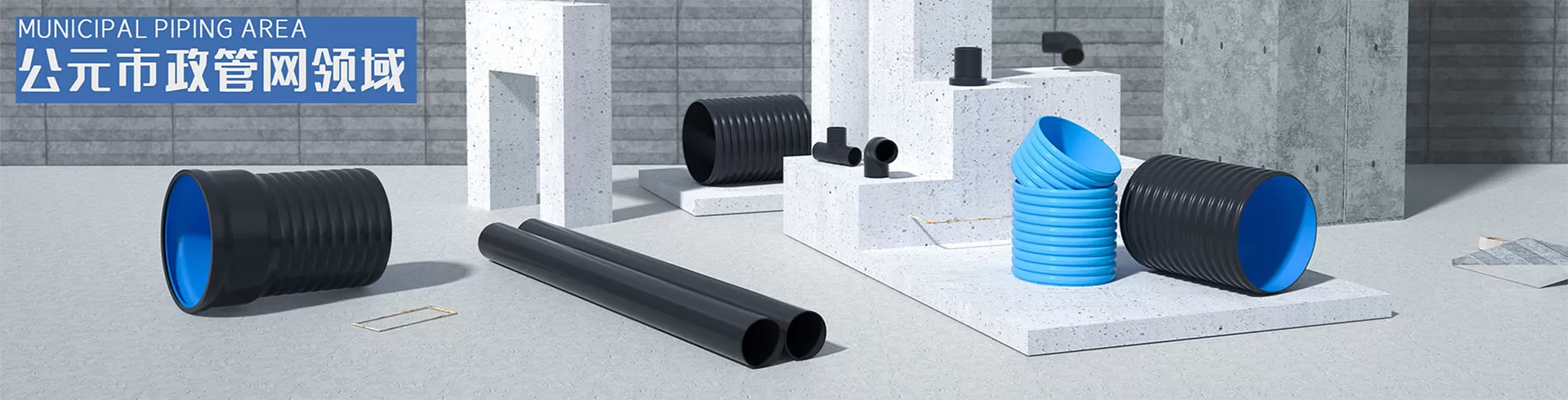
In municipal rain and sewage diversion, industrial park drainage and large-scale infrastructure projects, the material selection of buried drainage pipes is directly related to the safety and economy of the whole life cycle of the project. Engineering-specific carat pipes, that is, high-density polyethylene structural wall thermal winding pipes, are becoming the focus of more and more drainage projects due to their excellent corrosion resistance and reliable ring stiffness.
The core advantage of the carat tube is its unique structural design. The inner wall of the pipe is smooth and the friction coefficient is low, which can significantly improve the drainage efficiency and reduce siltation; the outer wall adopts a special-shaped reinforcement structure, and the corrugated reinforcing ribs and the pipe body are welded into a whole through the thermal winding process. This not only ensures the lightweight of the pipe, but also realizes a high ring stiffness grade, which can resist the long-term pressure caused by deep soil and dynamic loads. This "smooth inside and reinforced outside" design makes the pipe have excellent anti-settlement and anti-deformation ability under buried conditions.
Corrosion resistance is an irreplaceable characteristic of carat pipes in drainage projects. Acid, alkali and salt substances in domestic sewage, industrial wastewater and soil seriously erode traditional metal or concrete pipes, while polyethylene materials are chemically inert and can withstand the medium environment with a pH value of 1-10 for a long time without additional anti-corrosion coatings. The designed service life can reach more than 50 years. At the same time, the pipe connection adopts socket electric fusion welding or rubber ring sealing and socket, and a closed system of the same material as the pipe body is formed at the interface, which eliminates the risk of leakage and effectively protects the groundwater and soil environment.
In the construction process, the carat tube is light in weight, customizable in length, easy to transport and hoist, and can adapt to complex geological conditions. In areas with soft soil foundation or high groundwater level, through reasonable sand and gravel foundation treatment, the laying can be completed quickly and the construction period can be greatly shortened. It should be noted that the backfill should be made of medium coarse sand or undisturbed soil with particle size compliance, symmetrically layered and tamped to avoid direct contact with sharp hard objects on the pipe wall.
From the perspective of engineering applicability, the carat tube covers a variety of caliber requirements from residential drainage to urban backbone pipe network. Its ring stiffness usually includes SN4, SN8, SN12.5 and other series. Designers can choose the type flexibly according to the buried depth, load and geological report. For cross-section or high-fill areas, the use of higher ring stiffness products combined with concrete encapsulation can further enhance structural safety.
Overall, the engineering-specific carat pipe provides a more cost-effective solution for the whole life cycle of the buried drainage system with the comprehensive performance of corrosion resistance, high strength, zero leakage and easy construction. In the current era of increasing green construction and engineering durability requirements, the scientific selection of carat pipes helps to build a safe and long-lasting underground drainage network.


