
 简体中文
简体中文 Русский
 لالعربية
 Bahasa Melayu
 Tiếng Việt
 Bahasa Indonesia
 Українська
 Español
 Deutsch
 Français
 رسی
رسی ไทย
ไทย Português
 Nederlands
 Türkçe
.jpg "HDPE wound structural wall B-shaped pipe, municipal special carat pipethe1page")
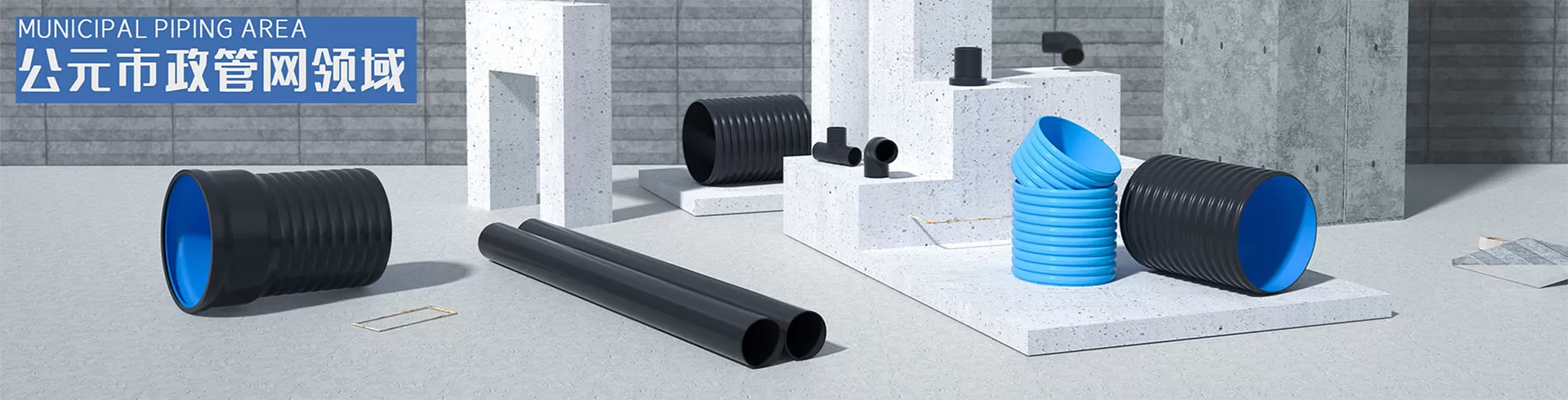
Municipal drainage projects have strict requirements on the ring stiffness, impermeability and durability of pipes. HDPE wound structural wall B-shaped pipes, which are often referred to in the industry as municipal carat pipes, are becoming the preferred solution in the field of large-diameter buried sewage with their unique structural design. The pipe uses high-density polyethylene as the main raw material and adopts the winding molding process to extrude special-shaped strips on a continuous rolling die and synchronously weld them into a flat inner wall of the pipe, while the outer wall forms a structurally enhanced waveform or rib-shaped profile. This "smooth inner wall and strengthened outer wall" structure greatly reduces the water flow resistance, and the flow capacity under the same pipe diameter is better than that of traditional pipes. The outer wall structure effectively shares the surrounding soil and traffic loads, and the ring stiffness level can be stable to SN8, SN10 or even higher, adapting to different burial depths.
The connection method is the key to ensure the overall sealing of the pipe network system. B-type structural wall pipes are usually connected by socket type electrofusion. One end of the pipe is prefabricated into a socket, embedded with electric heating wire elements, and the other end is a socket. Insert the socket into the socket during installation, and the electric heating wire is precisely heated after power is turned on, so that the joint surface polyethylene material is melted and cooled to form a whole. The joint strength can exceed the pipe body, completely eliminating the risk of groundwater infiltration and sewage leakage. This connection method is convenient for construction, has little impact on the site environment, and has relatively loose requirements for trench foundations. It is especially suitable for municipal sewage and rainwater pipe network construction in high groundwater level or soft soil foundation areas.
In terms of durability, high-density polyethylene itself has excellent chemical corrosion resistance, can resist domestic sewage, weak acid and alkali soil and microbial erosion for a long time, and has a designed service life of more than 50 years. The pipe has good flexibility, can be slightly deformed without cracking, and has good adaptability to uneven settlement of the foundation. At the same time, the lightweight feature reduces the cost of lifting and transportation, and can complete the paving of small and medium-diameter pipes without the need for large lifting equipment. In practical applications, the pipe is widely used in urban drainage main pipes, industrial wastewater collection, comprehensive pipe gallery drainage systems and highway culverts, etc., in line with the requirements of green municipal construction for environmental protection and recyclability of materials. Correct selection and standardized construction can enable municipal carat pipes to give full play to their structural advantages and provide long-term protection for the safe operation of underground pipe networks.


