
 简体中文
简体中文 Русский
 لالعربية
 Bahasa Melayu
 Tiếng Việt
 Bahasa Indonesia
 Українська
 Español
 Deutsch
 Français
 رسی
رسی ไทย
ไทย Português
 Nederlands
 Türkçe
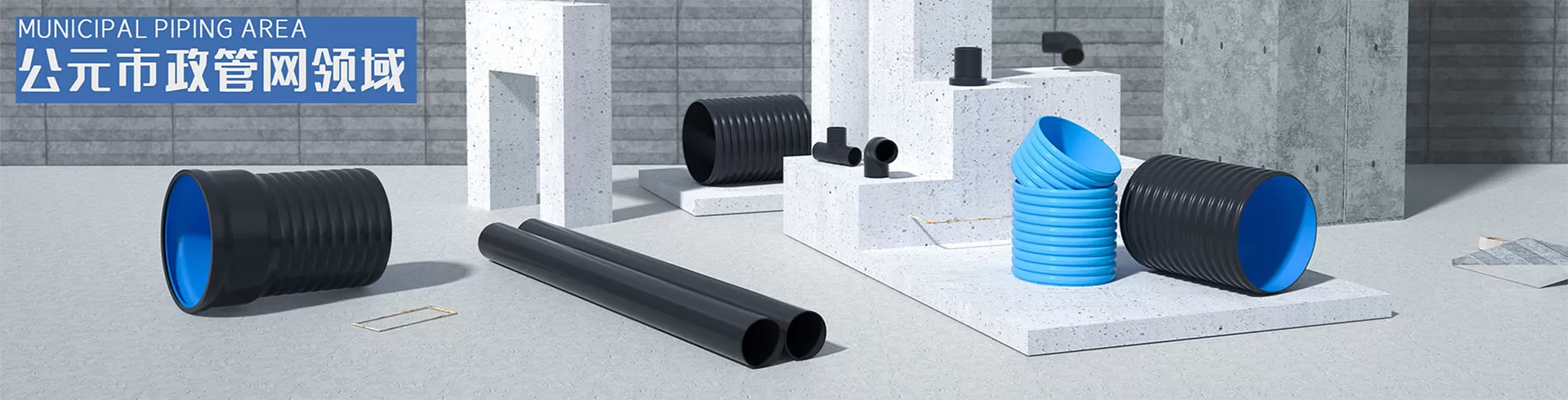

Municipal rain and sewage diversion is a key measure to improve the water environment, which places strict requirements on the tightness, deformation resistance and durability of the pipeline system. Among many pipes, high-density polyethylene (HDPE) carat pipes are becoming the preferred solution for such projects due to the deep coordination of structural design and material characteristics.
The core advantage of the carat tube comes from its unique winding molding process and wall thickness structure. The pipe is made of HDPE as the main raw material, and the special-shaped strip is welded into a whole through hot winding. The wall of the pipe presents a T-shaped or O-shaped rib profile with a convex and flat inside. This structure greatly improves the ring stiffness under the same weight, making it able to handle traffic loads and deep earth pressure calmly. At the same time, the inner wall is smooth, the Manning coefficient is low, and the water transmission resistance is small, which helps to maintain the self-cleaning flow rate of the pipe network.
The rain and sewage diversion project has extremely high requirements for the sealing of pipeline joints. Once leakage occurs, sewage entering the river or groundwater pouring will directly weaken the diversion effect. HDPE carat pipes are electrically fused with sockets of the same material or sealed with rubber rings. The interface and the pipe body form an integrated sealing system, which can effectively resist the micro-settlement and lateral displacement of the foundation and reduce the hidden danger of leakage from the source. The pipe itself has good chemical stability, acid and alkali resistance, and resistance to microbial corrosion. When transporting domestic sewage or initial rainwater, it can maintain performance for a long time without attenuation.
From the perspective of construction and maintenance, the carat tube is light in weight, customizable in length, and has high efficiency in on-site handling, downpipe and docking, which can shorten the trench exposure time and reduce the interference to existing traffic. Its flexible characteristics can also form a "pipe-soil interaction" with the surrounding soil, improving the overall seismic and uneven settlement resistance of the pipe network. In long-term operation and maintenance, the smooth inner wall is not easy to silt, and the flow capacity can be maintained with conventional dredging, and the cost advantage of the whole life cycle is obvious.
Combining ring stiffness, sealing reliability, construction convenience and corrosion resistance life, HDPE carat pipe accurately meets the demands of "zero leakage, low maintenance and long life" in rain and sewage diversion projects. The choice of this pipe is a double guarantee for engineering quality and environmental benefits.


