
 简体中文
简体中文 Русский
 لالعربية
 Bahasa Melayu
 Tiếng Việt
 Bahasa Indonesia
 Українська
 Español
 Deutsch
 Français
 رسی
رسی ไทย
ไทย Português
 Nederlands
 Türkçe
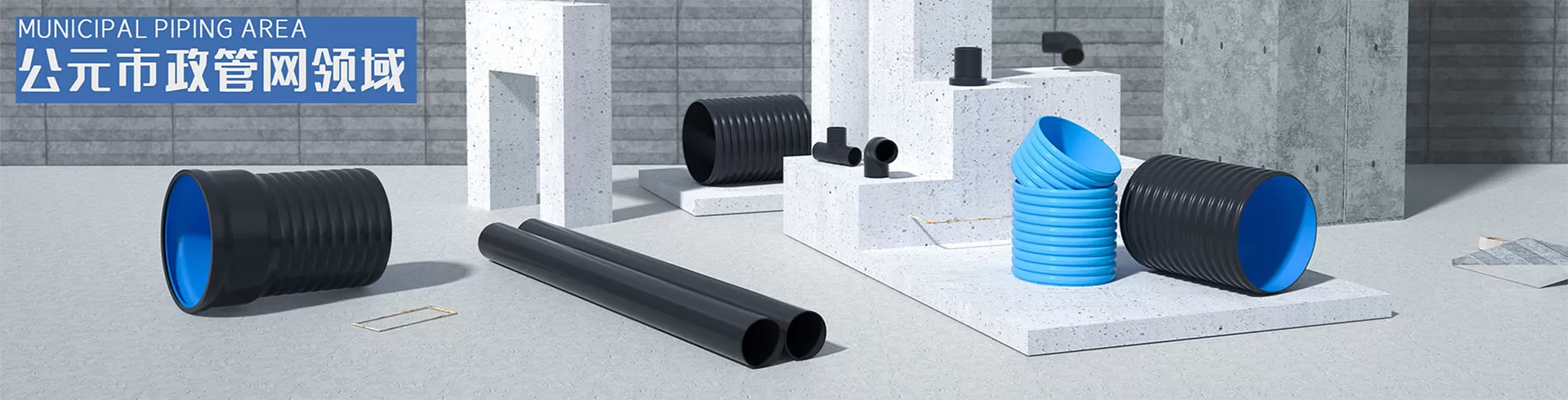

The high-strength MPP power protection pipe is a special power protection pipe made of modified polypropylene as the core raw material. It is mainly used for external protection during the laying of power cables to avoid external damage and corrosion of cables and ensure the safety of power transmission. It is currently the mainstream selection of pipes for urban cable ground-entry projects in China. The products are divided into two categories: ordinary type and reinforced type. The pipe diameter covers the full specification range of 50mm to 315mm, which can adapt to the protection requirements of power cables with different wire diameters and different voltage levels. The production process strictly follows the relevant general standards for power engineering pipes, and the performance parameters are stable and controllable.
The core selling points mainly include four points: First, the physical protection performance is excellent, the compressive strength of the pipe is more than twice that of the ordinary power PVC sheathed pipe, it can withstand static ballast within 10 tons, and the impact resistance meets the industry standard requirements. It will not be brittle and damaged under external impact at -10 ° C, and the outer layer is smooth and wear-resistant. It is not easy to scratch and crack during laying and dragging. Ordinary road sections are buried in the ground without additional concrete encapsulation, which can simplify the construction process. Second, the weather resistance and corrosion resistance are stable. The long-term use temperature range of the product is -40 ° C to 70 ° C, and there will be no deformation or leakage problems due to the temperature difference between the four seasons. The insulation performance is up to standard, and the breakdown voltage is much higher than the threshold required by the industry. There is no risk of leakage conduction. It can withstand acid-alkali and salt corrosion in the soil, and is not subject to termites and soil microorganisms. The service life can reach 50 years under normal buried use scenarios. Third, the construction adaptability is strong. Under the same specification, the weight of the pipe is only 1/7 of that of the steel pipe, and the transportation, handling and laying costs are lower. It can be connected by hot melt docking process, and the sealing of the joint meets the relevant standards. There will be no problems of groundwater and soil infiltration into the pipe. At the same time, it supports the trenchless pipe jacking construction process without large-scale excavation of the road surface. It is suitable for cable laying operations in urban core areas and traffic arteries, which can shorten the construction period and reduce the impact on public transportation. The fourth is environmental protection property compliance, product production, use of the whole process does not produce toxic and harmful substances, raw materials can be recycled and repurposed, in line with municipal engineering green building materials related requirements, flame retardant performance standards, no toxic flue gas release during combustion, even if the cable overload fire situation, will not expand secondary hazards.
In addition to being used as the main pipe material for urban cable ground-entry projects, the pipe can also be adapted to various scenarios such as municipal power pipe network transformation, industrial park power pipeline laying, rail transit power supporting construction, urban lighting engineering cable protection, and pre-embedding of power pipelines in residential areas. The main body of adaptation includes municipal engineering contractors, power construction enterprises, pipeline operation and maintenance management units, real estate development enterprises, infrastructure building investors, etc. The purchaser can select the corresponding strength and pipe diameter products according to the buried depth of the construction section, ground ballast requirements, cable specifications and other parameters.
The current production and testing of such products strictly follow the relevant national and industry standards for plastic protective pipes for power engineering. All batches of products need to complete a number of performance tests such as pressure resistance, insulation, and temperature resistance before leaving the factory. After passing the test, they can be put on the market for circulation. It can be adapted to the acceptance requirements of power engineering construction in most regions in China. The purchaser can require the supplier to provide the corresponding batch of formal test reports to check the parameters to ensure that the product meets the construction standards.


