
 简体中文
简体中文 Русский
 لالعربية
 Bahasa Melayu
 Tiếng Việt
 Bahasa Indonesia
 Українська
 Español
 Deutsch
 Français
 رسی
رسی ไทย
ไทย Português
 Nederlands
 Türkçe
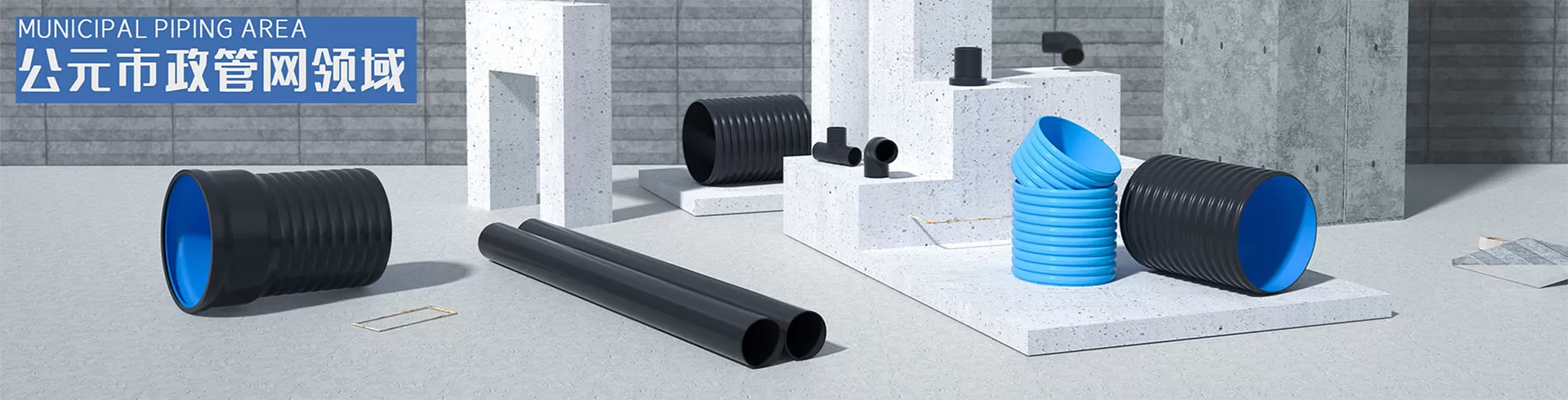

MPP pipes are special pipes for power pipeline protection made of modified polypropylene as the main raw material. They are usually divided into ordinary and reinforced types. They have good electrical insulation, high temperature resistance and external pressure resistance. At present, there are a large number of mature application cases in the field of municipal underground power pipeline network construction in China, and they are one of the commonly used pipes for power cable threading protection.
The core practical selling points of this type of pipe are mainly four points: First, it has strong construction adaptability. The weight of MPP pipe is only about one-eighth of that of cement pipe of the same specification. It is difficult to transport and handle, and can be connected by hot melt docking. The interface has good sealing performance and good flexibility. It can adapt to a small amount of terrain settlement and angle deviation requirements during the pipe network laying process. It can also be laid through pipes normally in trenchless construction scenarios, without the need for large-scale excavation of the road surface. It can shorten the construction period and reduce the impact on normal traffic in municipal public areas. Second, the protection performance is stable. The long-term use temperature range of MPP pipes is between -5 ° C and 70 ° C, which can adapt to the climatic conditions of most regions in China. It is resistant to acid and alkali corrosion, not easy to scale, and has good resistance to soil corrosion and rain soaking in buried environments. At the same time, it has excellent electrical insulation, which can effectively avoid conductive interference between power cables and soil and other pipelines, and reduce safety hazards such as leakage and short circuit. Under normal buried use conditions, the service life can reach more than 50 years. The third is that the operation and maintenance cost is low, the inner wall of MPP pipe is smooth, the friction coefficient is small, the outer protective layer of the cable will not be scratched during the threading process, the cable pumping and replacement difficulty is low in the later operation and maintenance process of the pipe network, and the pipe itself has good resistance to external impact performance, is not prone to fracture, leakage and other problems, which can reduce the frequency and related costs of daily inspection and maintenance of the pipe network. Fourth, the environmental protection properties meet the standards. The MPP pipe production process does not add heavy metal stabilizers, the material is non-toxic and harmless, and will not pollute soil and groundwater during buried use. Waste pipes can be recycled and reprocessed, which meets the relevant requirements of green construction of municipal engineering.
In terms of application scenarios, ordinary MPP pipes are suitable for municipal power pipeline network excavation and laying projects with a depth of 1-4 meters, civil construction power pipeline protection projects, etc.; reinforced MPP pipes are suitable for trenchless power pipeline network laying projects with a depth of more than 4 meters, as well as power pipeline protection scenarios crossing roads, railways and buildings. The suitable population is mainly municipal engineering construction units, power pipeline network construction units, pipeline design units, construction project purchasers, etc. MPP pipes of corresponding specifications can be selected according to the specific burial depth, construction method and load requirements of the project.
At present, the production and construction of MPP pipes have issued corresponding national and industry standards. All qualified products sold in the market must pass the performance inspection of a third-party testing agency and meet the standard requirements before they can be put into engineering use. This type of pipe has been applied in hundreds of municipal underground power pipeline network projects in China, with stable operation and wide recognition in the industry. It is one of the mainstream materials for municipal power pipeline protection.


