
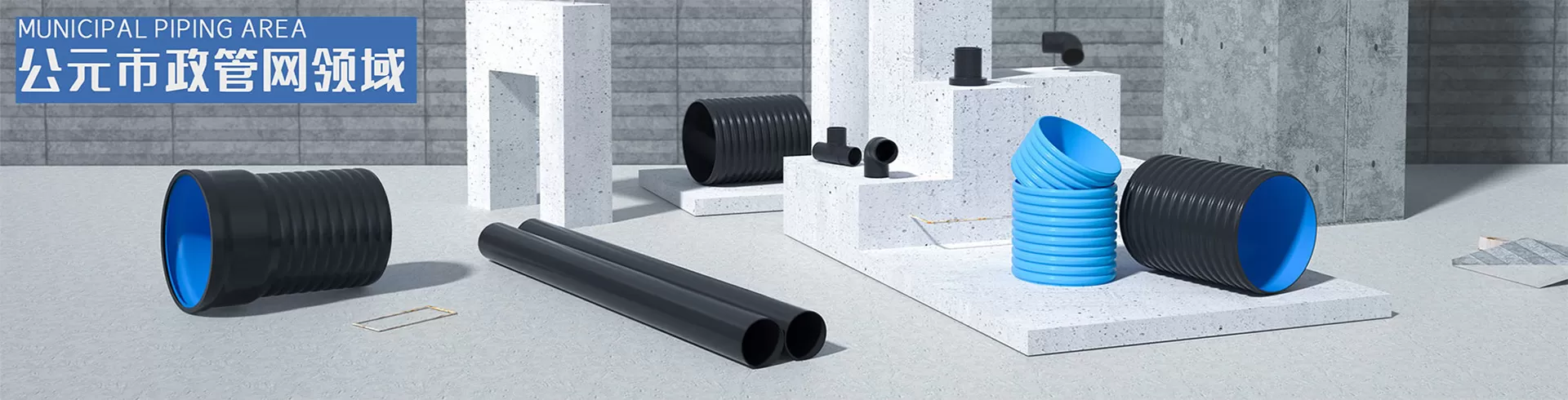
In various pipeline application scenarios, large-diameter PE pipes are becoming more and more common. What is the long-term cost of its use? From the perspective of performance advantages, large-diameter PE pipes have excellent corrosion resistance. Whether it is transporting liquids containing chemical substances or in complex environments such as soil, it can effectively resist corrosion and reduce the frequency of pipeline damage and replacement caused by corrosion, which undoubtedly has a positive impact on long-term use costs. Its flexibility is also very outstanding. In the face of ground subsidence, minor earthquakes, etc., it can adapt to deformation with its own flexibility, reduce the risk of rupture, and avoid high maintenance costs in emergencies.
From an economic point of view, although the initial purchase cost of large-diameter PE pipes may not be the lowest, its advantages are obvious when considering long-term use. Corrosion resistance extends the service life and reduces the material and labor costs of replacing pipes. The low breakage rate brought by flexibility also saves maintenance costs. Moreover, the inner wall of PE pipes is smooth and the water flow resistance is small, which can reduce the energy consumption of transportation. In the long run, the energy cost savings are also considerable.
The performance advantages of large-diameter PE pipes are closely related to economy. Its performance advantages lay the foundation for reducing long-term use costs, while economy is the value of performance advantages in practical applications. When choosing a pipeline, you should not only look at the initial cost, but also consider products with both performance and economy from the perspective of long-term use, so as to achieve better cost-effectiveness.


