
 简体中文
简体中文 Русский
 لالعربية
 Bahasa Melayu
 Tiếng Việt
 Bahasa Indonesia
 Українська
 Español
 Deutsch
 Français
 رسی
رسی ไทย
ไทย Português
 Nederlands
 Türkçe
.jpg "B-type structural wall carat pipe, commonly used pipe for municipal infrastructurethe1page")
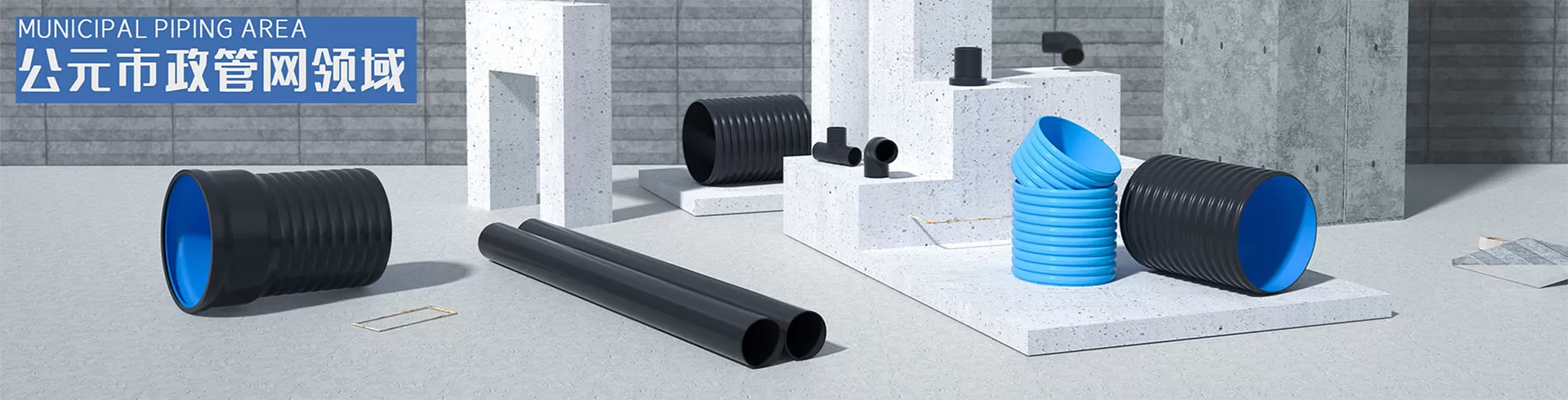
In municipal water supply and drainage, sewage and rainwater collection infrastructure, pipe ring stiffness and long-term operation reliability is very important. B-shaped structural wall carat pipe, as a typical representative of high-density polyethylene wound reinforced pipe, has become a common choice in modern municipal pipe network engineering due to its unique molding process and structural design.
The pipe adopts a hot winding forming process, in which the flat strip and the molten special-shaped reinforcing ribs are wound synchronously to form a composite structure with spiral-shaped reinforcing ribs on the outer wall and smooth inner wall. This B-shaped structural wall design greatly improves the ring stiffness of the pipe under the same weight, enabling it to withstand deep soil and dynamic traffic loads. At the same time, the smooth inner wall effectively reduces the fluid transportation resistance and improves the drainage efficiency.
The material is made of high-density polyethylene, which gives the pipe excellent chemical corrosion resistance and impact toughness, and has good tolerance to acid-alkali soil and domestic sewage. The connection method is mostly made of socket electric fusion welding or flexible connection of sealing rings, which is convenient for construction and has zero leakage risk of the interface. It can adapt to the micro-settlement of the foundation under complex geological conditions.
From municipal rain and sewage diversion transformation to industrial park drainage pipe network, from sponge city seepage storage facilities to comprehensive pipe gallery matching, B-type structural wall carat pipe balances engineering economy and long-term operation and maintenance costs with stable mechanical properties and durability. Its production and testing strictly follow national product standards to ensure that each section of pipe can last for a long time to protect the safety and smoothness of the underground pipe network after backfilling.


