
 简体中文
简体中文 Русский
 لالعربية
 Bahasa Melayu
 Tiếng Việt
 Bahasa Indonesia
 Українська
 Español
 Deutsch
 Français
 رسی
رسی ไทย
ไทย Português
 Nederlands
 Türkçe
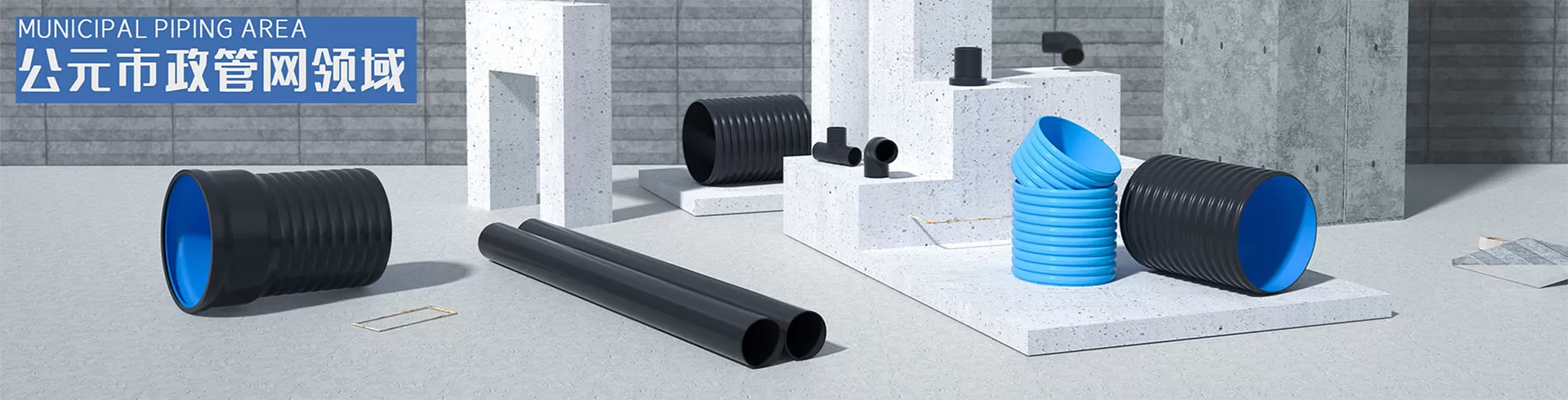
As a commonly used plastic pipe product for municipal drainage, sewage, and power sheathed pipe networks, carat pipe ring stiffness is the core performance indicator that determines its anti-settlement ability and service life. Many unscrupulous merchants will make profits by lowering their quotations through false ring stiffness grades. By mastering scientific on-site inspection skills, they can effectively avoid such quality risks and reduce subsequent hidden dangers of the project.
Appearance initial inspection, rapid screening of basic non-conforming products
After arrival, first check the appearance status of the whole batch of pipes, observe whether there are cracks, pits, and obvious deformation on the outer wall, whether the structural ribs surrounding the pipe body are evenly distributed without breaks, whether the port cutting is flat without burrs, and whether the inner wall is smooth without bubbles and obvious impurities. At the same time, check the parameter identification printed on the surface of the pipe to confirm that the marked ring stiffness grade, specifications and dimensions are consistent with the requirements of the purchase contract. Pipes with vague identification and missing parameters can be directly determined as defective products.
.jpg "Carat tube on-site inspection skills to prevent ring stiffness false standard pipesthe1page")
Dimensional verification, locking ring stiffness correlated core parameters
The ring stiffness of a carat tube is directly related to the wall thickness of the tube and the height of the structural ribs. Most products with virtual standard ring stiffness have problems such as insufficient wall thickness and insufficient rib height. On site, 3-5 different batches of pipes can be randomly selected with the help of simple tools such as vernier calipers and steel tape measures, and the thickness of the inner pipe wall and the height of the structural ribs can be measured respectively. At least 3 different points in the middle and end of the same pipe can be selected for measurement. If the parameter deviation exceeds the allowable range of industry standards, there is a high probability that there is a problem of false standard of ring stiffness.
Simple testing, quick verification of ring stiffness
When there is no professional testing equipment, the ring stiffness can be preliminarily verified by a simple load-bearing test: the entire pipe is selected and placed horizontally on a flat ground, and the static load corresponding to the ring stiffness level is evenly applied on the top of the pipe. After standing for 3 to 5 minutes, the deformation of the pipe is observed. If the deformation cannot rebound quickly and irreversible depression occurs after unloading, it can be determined that the ring stiffness is not up to standard.
Standardized inspection, build a solid quality last line of defense
Projects that arrive in batches should be sent to qualified third-party testing institutions in strict accordance with the requirements of engineering acceptance specifications, and a sufficient number of samples should be randomly selected to conduct formal ring stiffness performance tests. If the test results do not match the procurement requirements, they should be returned in batches to avoid unqualified pipes from flowing into the construction process.
Mastering the above inspection skills can effectively avoid problems such as pipeline settlement, leakage, and shortened service life caused by false ring stiffness standards, greatly reduce the cost of operation and maintenance in the later stage of the project, and ensure the quality of project delivery.


