
 简体中文
简体中文 Русский
 لالعربية
 Bahasa Melayu
 Tiếng Việt
 Bahasa Indonesia
 Українська
 Español
 Deutsch
 Français
 رسی
رسی ไทย
ไทย Português
 Nederlands
 Türkçe
.jpg "Small-diameter sewage project, double-wall corrugated pipe and steel belt pipethe1page")
Small-diameter sewage treatment projects are a key link in urban and township sewage treatment systems, and pipeline selection directly affects the long-term stability and operation and maintenance costs of the system. Among many pipe options, double-wall corrugated pipes and steel belt pipes are two widely used mainstream products, which need to be selected according to the actual engineering scene, budget, geological conditions and other dimensions.
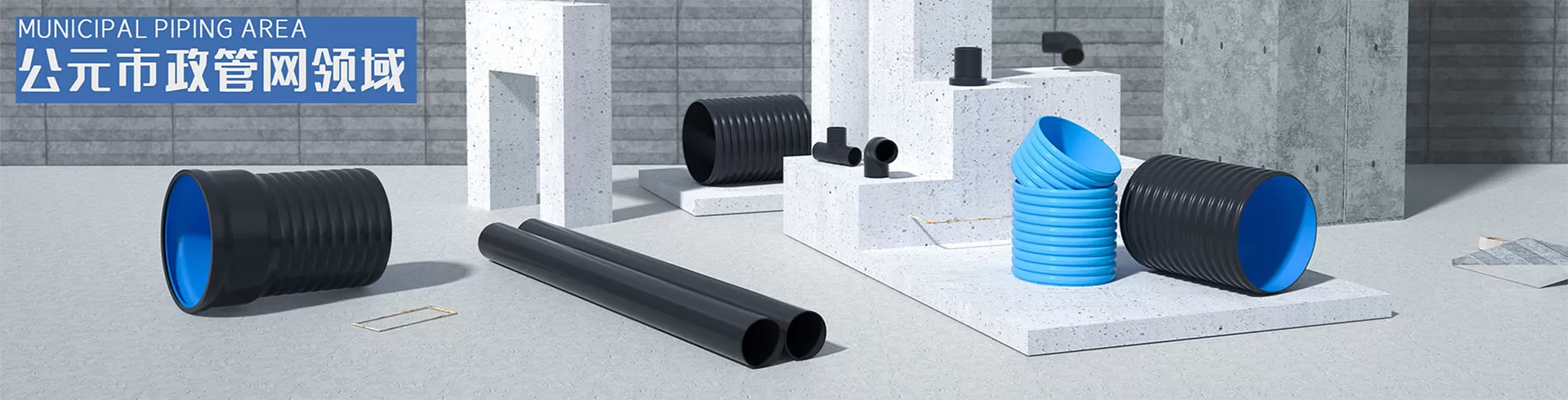
The double-wall corrugated pipe adopts a double-layer structure design, which has excellent ring stiffness and external pressure resistance, and can adapt to most conventional buried sewage discharge scenarios. Its inner wall is smooth and flat, and the water flow resistance is small, which can reduce the probability of siltation and blockage, and the daily operation and maintenance are difficult. At the same time, the pipe is light in weight, convenient for transportation and on-site installation, and does not require large equipment assistance. The upfront investment cost is relatively moderate. However, in areas with complex geological conditions and frequent traffic of heavy-duty vehicles, its ultimate compression performance may not meet the needs of long-term use.
The steel belt pipe is reinforced with a high-strength steel belt as the skeleton, and the outer layer is covered with a plastic layer. The ring stiffness is far higher than that of the double-wall corrugated pipe of the same specification, and it can withstand stronger external pressure and heavy-load impact. It is suitable for under the main road, in the heavy-load area of the industrial park, or in special working conditions where the geology is soft and easy to settle. However, the overall weight of the steel belt pipe is too large, and the transportation and installation need to be equipped with special lifting equipment. The upfront procurement and construction costs are relatively high; and the outer layer anti-corrosion protection needs to be done to avoid the corrosion of the steel belt affecting the overall service life
When selecting the best, if the project is located in a conventional residential area, green belt, and other non-heavy-duty scenarios, the budget is limited and the installation efficiency is pursued, double-wall corrugated pipes are a more cost-effective choice; if the project involves heavy-duty traffic areas, complex geological conditions, and long-term stability needs to be guaranteed, steel belt pipes are given priority. Although the initial investment is high, it can effectively reduce the later operation and maintenance risks and maintenance costs. In addition, comprehensive judgments are required based on factors such as local sewage discharge and construction cycle to ensure that the selected pipes are suitable for the actual needs of the whole life cycle of the project.


