
 简体中文
简体中文 Русский
 لالعربية
 Bahasa Melayu
 Tiếng Việt
 Bahasa Indonesia
 Українська
 Español
 Deutsch
 Français
 رسی
رسی ไทย
ไทย Português
 Nederlands
 Türkçe
.jpg "Deep buried heavy-duty pipe network, what are the reasons for choosing steel bellows?the1page")
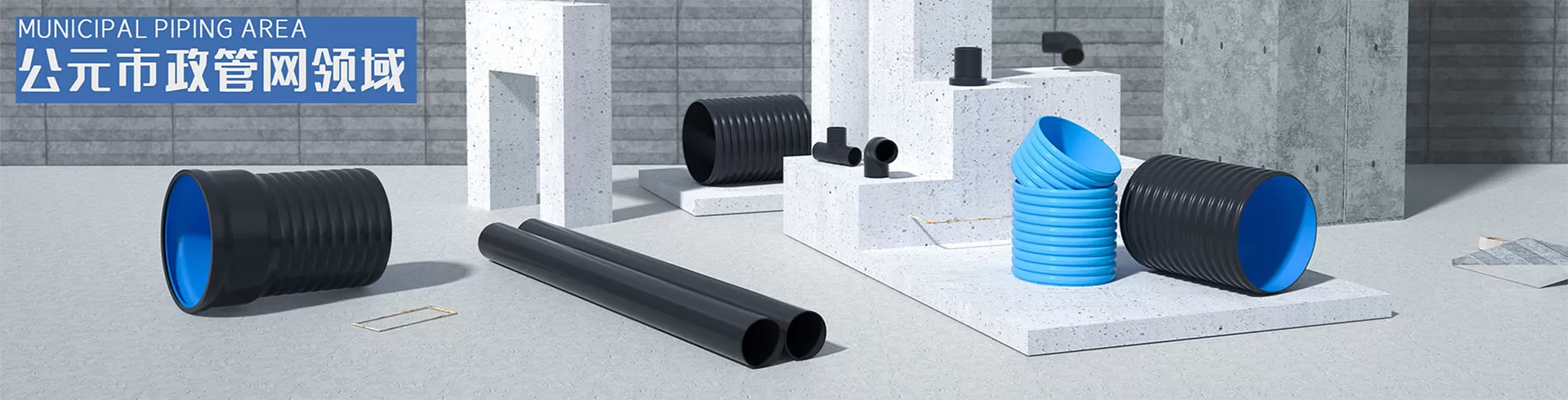
The underground pipe network in the deep-buried heavy-load scenario has strict requirements on the performance of the pipeline, and the steel belt bellows have become the best choice for many projects, and there are multiple professional reasons behind it. The first is the structural strength to meet the heavy-load requirements. The steel belt bellows are made of steel-plastic composite structure. The rigidity of the steel belt is combined with the toughness of the plastic, which can withstand large external pressures. Even if they are buried deep underground, they can maintain structural stability in the face of heavy-load conditions such as rolling of road vehicles and soil extrusion. It is not easy to deform or break, and meets the compression requirements of deep-buried heavy-load pipe networks. Secondly, it has excellent corrosion resistance. The underground environment is complex, and there are often acid and alkali, corrosive soil and groundwater. The outer plastic of the steel belt bellows has good corrosion resistance, which can isolate the contact between the steel belt and the corrosive medium, avoid corrosion and aging, greatly prolong the service life of the pipeline, reduce the later maintenance cost, and adapt to the long-term service needs of the underground. Furthermore, the construction convenience and economy. The steel belt bellows are relatively light in weight, have low difficulty in handling and installation, and adopt the socket connection method, which has high construction efficiency and can shorten the construction period of the deep buried pipe network. At the same time, its production process is mature, and the material cost is controllable. Compared with the traditional heavy-duty pipeline, the overall project cost is more advantageous, and both performance and economy are taken into account. In addition, good drainage performance is also the key. The inner wall of the steel belt corrugated pipe is smooth, the fluid resistance is small, and it is not easy to occur siltation. It can ensure the drainage smoothness of the deep buried heavy-load pipe network, especially suitable for scenarios with large flow demand such as municipal drainage and industrial sewage. Finally, the environmental protection properties are in line with the industry trend. Most of the plastics used are recyclable materials, and the pollution during production and construction is small. It meets the current green municipal construction requirements. In the deep buried heavy-load pipe network project, both engineering benefits and ecological benefits can be considered.


