
 简体中文
简体中文 Русский
 لالعربية
 Bahasa Melayu
 Tiếng Việt
 Bahasa Indonesia
 Українська
 Español
 Deutsch
 Français
 رسی
رسی ไทย
ไทย Português
 Nederlands
 Türkçe
.jpg "Full-size carat tube DN300-DN2000 wound B-shaped tubethe1page")
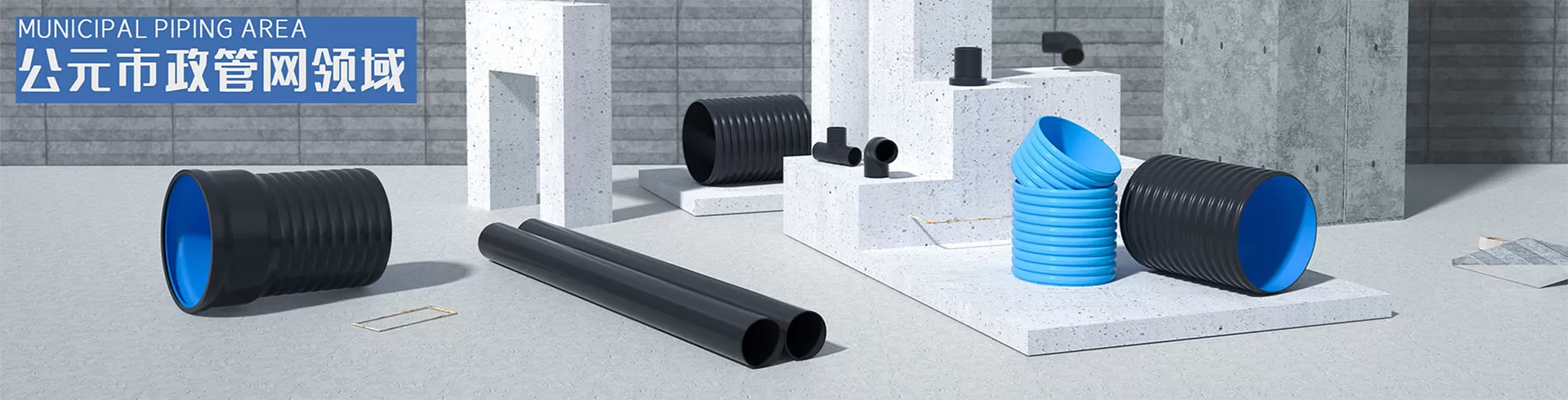
In municipal drainage, sewage transportation and large-scale park pipe network construction, the coverage capacity and structural reliability of pipeline diameter directly affect the long-term operation effect of the system. Winding B-shaped pipe, often called carat pipe, uses high-density polyethylene as the main raw material and adopts hot winding molding process, which can stably produce DN300 to DN2000 full-specification series, providing a unified material solution for different flow conditions.
The socket-type electrofusion connection method of the pipe can form a firm welding interface under various diameters from DN300 to DN2000, effectively avoiding the problems of easy leakage of small-diameter mechanical connections and difficult alignment of large-diameter welding. The pipe wall structure is composed of a flat inner wall and a special-shaped reinforced outer wall. By optimizing the distribution of ribs, the ring stiffness grade can cover SN4 to SN12.5. Even in areas with deep soil or dynamic loads, the corresponding specifications can still be selected to maintain the stability of the section.
From DN300 branch pipe collection to DN2000 trunk pipe transportation, the full range of carat pipes can be flexibly matched according to the actual project. Small-diameter pipes are convenient for quick laying of branch lines, while medium and large-diameter pipes show good hydraulic characteristics in long-distance transportation, low inner wall roughness, and good conveying capacity retention. For different geological conditions, the toughness of the pipe can adapt to a certain degree of non-uniform settlement, avoiding the risk of rigid interface fracture.
When selecting the type, it is necessary to comprehensively determine the combination of ring stiffness and diameter in combination with the design flow rate, buried depth and surrounding loads. DN300 to DN800 are often used in the internal pipe network of residential areas and parks and the initial rainwater interception; DN900 to DN1500 are mostly used in municipal secondary pipes and pumping station outlets; DN1600 to DN2000 are used in main pipe galleries, large drainage pumping stations and sewage treatment plant incoming mains. The advantage of full-specification coverage is that there is no need to switch multiple pipe systems for the same project, the connection reliability is consistent, and the management of spare parts is easier.
In the construction process, the whole series of carat pipes are uniformly operated by electrofusion welding machines, with a low threshold for operation training. Large-diameter pipes can be cut and adjusted on site, and the matching electrofusion belt can be used to achieve a closed connection to reduce the dependence on special-shaped parts. The pipes are lightweight and high-strength, and the lifting and transshipment efficiency is high. Especially under the conditions of rich groundwater or narrow working surface, it can shorten the exposure time of foundation pits and improve construction safety.
From a long-term operation and maintenance perspective, polyethylene material has excellent chemical corrosion resistance, good tolerance to domestic sewage and weak acid and alkali industrial wastewater. The inner wall of the pipe is not easy to scale, and the cleaning and maintenance cycle is long. The complete sequence of full-specification carat pipes DN300 to DN2000 provides designers and owners with a systematic pipeline solution from source collection to end discharge, taking into account technical rationality and engineering economy.


