
 简体中文
简体中文 Русский
 لالعربية
 Bahasa Melayu
 Tiếng Việt
 Bahasa Indonesia
 Українська
 Español
 Deutsch
 Français
 رسی
رسی ไทย
ไทย Português
 Nederlands
 Türkçe
.jpg "Purchase of electric hot melt pipe fittings for steel bellows, one-stop purchase of supporting pipesthe1page")
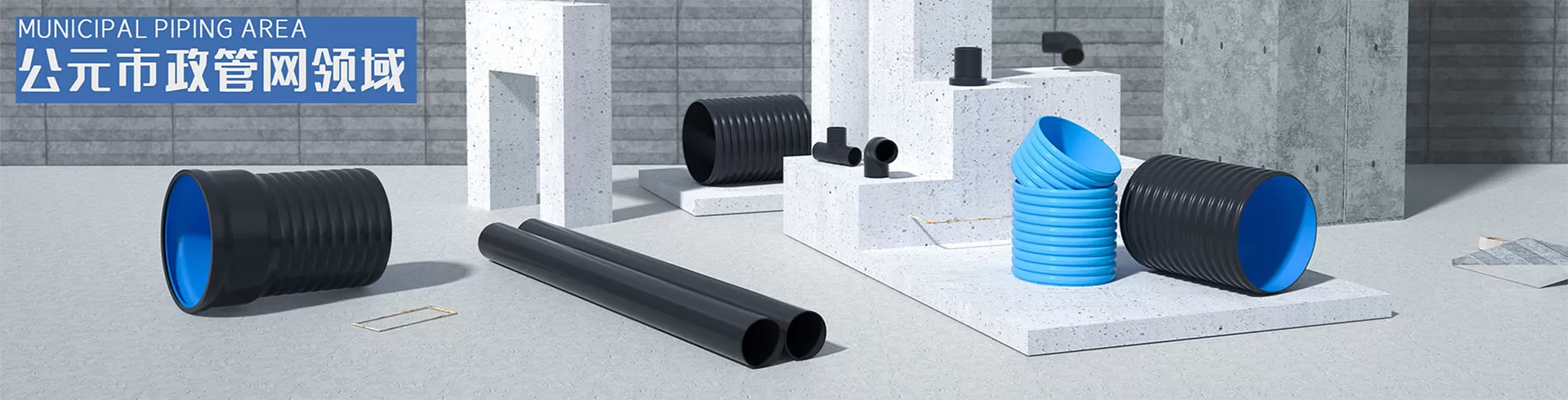
In municipal drainage, industrial sewage, farmland irrigation and other engineering scenarios, steel bellows have become a common choice for pipeline systems due to their high strength ring stiffness and excellent corrosion resistance. As the core component of connecting steel bellows, the quality and adaptability of electric hot-melt pipe fittings directly determine the sealing and service life of the pipeline system. Therefore, the procurement of pipe fittings and supporting pipes needs to be considered in an important position.
When purchasing steel belt bellows electric heating pipe fittings, three points should be paid attention to: first, material adaptation, to ensure that the material composition of the pipe fittings matches the material composition of the supporting steel belt bellows, so as to avoid uneven stress and sealing failure after welding due to material differences; second, specification accuracy, the inner diameter, wall thickness and electric heating wire arrangement of the pipe fittings must meet the standards, and the dimensional deviation should be controlled within a reasonable range to ensure smooth docking with the pipe; third, process details, high-quality electric heating pipe fittings should have a uniform depth of embedding of the electric heating wire to avoid local overheating during welding.
Choosing a one-stop purchase model for supporting pipes can effectively solve the problem of matching pipe fittings and pipes purchased separately. On the one hand, one-stop procurement saves the communication cost of connecting with multiple suppliers and shortens the procurement cycle; on the other hand, the pipe fittings and pipes of the same channel have undergone preliminary adaptation testing, and the models and parameters are completely matched, reducing the risk of installation and rework. In addition, one-stop suppliers usually provide professional selection guidance, and recommend suitable combinations of steel bellows and electric hot melt pipe fittings according to the requirements of the engineering environment and pressure level, to help the purchaser accurately control the cost and quality.
When making a one-stop purchase, the purchaser needs to first clarify the specific requirements of the project, including pipeline diameter, operating pressure, laying environment, etc., and then screen the supply channels that can provide a full range of products. At the same time, pay attention to the product quality inspection report to ensure that the pipe fittings and pipes meet industry standards and ensure the quality of the project from the source. Relying on the advantage of one-stop purchase can not only improve the procurement efficiency, but also lay a solid foundation for the stable operation of the subsequent pipeline system.


