
 简体中文
简体中文 Русский
 لالعربية
 Bahasa Melayu
 Tiếng Việt
 Bahasa Indonesia
 Українська
 Español
 Deutsch
 Français
 رسی
رسی ไทย
ไทย Português
 Nederlands
 Türkçe
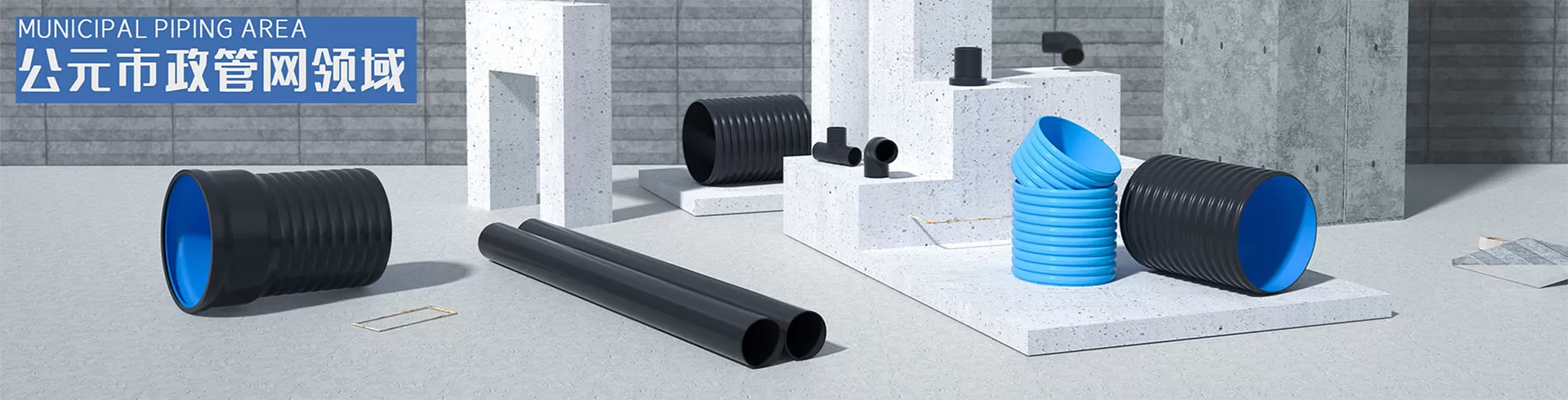

The selection of municipal engineering pipelines is directly related to the long-term stability and operation and maintenance costs of the project. Carat pipes and steel belt reinforced pipes are often confused as commonly used plastic pipes in the field of municipal drainage and sewage. Today, let's compare and popularize from the core dimension.
Structurally, the carat pipe is a high-density polyethylene winding structure wall pipe, relying on the PE material winding structure to enhance the ring stiffness; the steel belt reinforced pipe is a composite structure of polyethylene wrapped steel belt, and the core support comes from the embedded steel belt.
In terms of performance, the ring stiffness is obviously different: the stiffness of the carat tube ring is mostly SN8-SN25, which can meet the load requirements of general municipal roads and surrounding areas; the stiffness of the steel belt reinforced pipe ring can reach SN16-SN40, which can withstand complex working conditions such as heavy loads on main roads and uneven ground settlement. In terms of flexibility, the carat tube performs better and is suitable for areas with large terrain fluctuations; the steel belt reinforced tube has strong rigidity and small deflection, making it suitable for leveling high-load road sections.
In terms of application scenarios, carat pipes are more suitable for small and medium-diameter, general-load scenarios such as municipal rain and sewage branch pipe networks and community sewage; steel belt reinforced pipes are suitable for high-load pipeline projects under large-diameter trunk drainage pipes, highways, and urban trunk roads.
In terms of construction and cost, carat pipes are light in weight, can be transported and installed manually, with high construction efficiency and significant cost advantages for small and medium-diameter sections. Steel belt reinforced pipes require supporting lifting equipment due to the large weight of steel belts, which is cost-effective only in large-diameter and high-load scenarios.
When selecting the type, it is necessary to combine the comprehensive judgment of the project load grade, pipeline diameter, terrain conditions and budget to select the pipeline with the best adaptability.


