
 简体中文
简体中文 Русский
 لالعربية
 Bahasa Melayu
 Tiếng Việt
 Bahasa Indonesia
 Українська
 Español
 Deutsch
 Français
 رسی
رسی ไทย
ไทย Português
 Nederlands
 Türkçe
Specifications of common carat tubes in municipal engineering
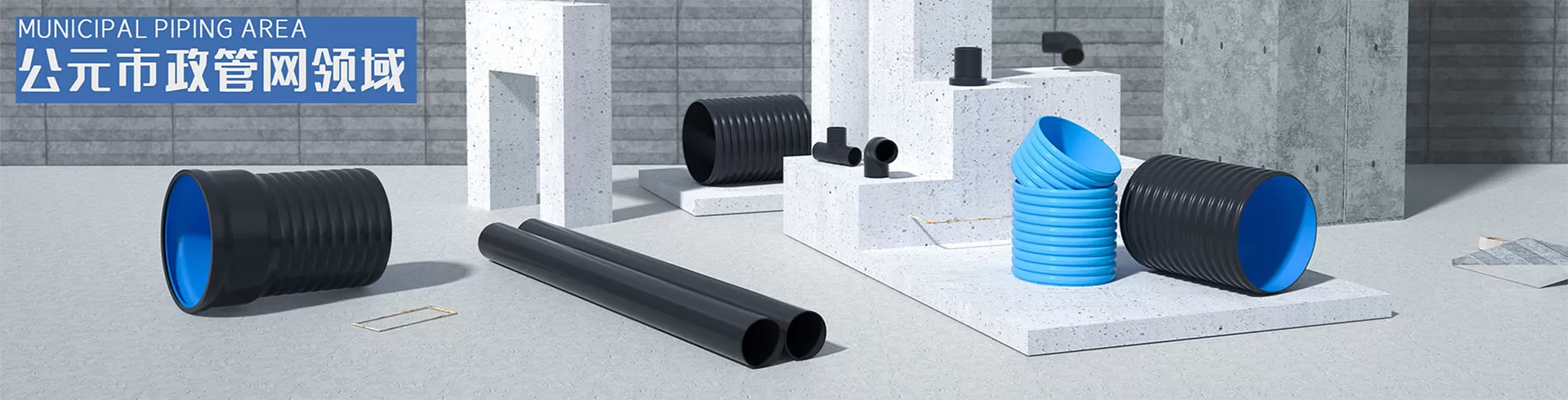
The full name of carat pipe is high-density polyethylene wound structural wall B-shaped pipe, which is one of the mainstream pipes in municipal pipe network construction. At present, the diameter of carat pipe commonly used in municipal projects covers the DN300 to DN4000 range, and the conventional supply length is 6 meters and 9 meters. Non-standard lengths can also be customized according to the special needs of the project. Different diameters are suitable for different application scenarios: DN300-DN1200 specifications are mostly used for community sewage branch pipes, municipal secondary pipe networks, and old pipe network reconstruction branches; DN1500-DN4000 large diameter specifications are mostly used for urban main road rainwater discharge main pipes, sewage treatment plant water inlet and outlet supervisors, underpass tunnel drainage systems, water conservancy water transmission projects and other scenarios. The interface form is mainly based on socket electric hot melt connection and heat shrinkable sleeve connection, which can be adapted to various construction processes such as slotted buried pipes and trenchless pipe jacking.
Carat tube ring stiffness selection core standard
Ring stiffness is the core indicator to measure the ability of carat tubes to withstand external pressure loads. At present, the ring stiffness grades commonly used in municipal fields are divided into four categories: SN4, SN8, SN12.5, and SN16. The selection first refers to the buried depth: SN4 grade can be selected for pipe networks with a buried depth of less than 3 meters, SN8 grade can be selected for buried depths of 3-6 meters, SN12.5 grade can be selected for buried depths of 6-10 meters, and SN16 and higher grades can be selected for projects with a buried depth of more than 10 meters. Secondly, refer to the road load conditions: the pipe network laid under the main roads and heavy vehicle traffic areas in the city needs to be upgraded by at least one grade on the basis of the corresponding level of buried depth; the pipe network laid under the sidewalk and green belt can be appropriately reduced, but the minimum level should not be lower than SN4. In addition, in areas where the compaction of soft soil foundation and backfill cannot meet the design requirements, it is also necessary to appropriately improve the ring stiffness level to avoid later deformation and leakage of the pipeline.
Selection of supporting construction and cost control points
When selecting the type, it is also necessary to match the needs of the construction scene. Flexible spreader should be used for hoisting large-diameter carat pipes to avoid scratching the pipe wall and affecting the structural strength; electric hot-melt connection needs to strictly control the welding temperature and duration to ensure that the sealing performance of the interface meets the standard. Carat pipes themselves have the advantages of corrosion resistance, settlement resistance and long service life. The weight is only one-eighth of that of concrete pipes of the same diameter, which can greatly reduce transportation and construction costs. There is no need to blindly pursue high ring stiffness when selecting the type, avoid unnecessary cost waste, and do not choose a grade lower than the scene requirements in order to reduce the budget, which will cause hidden dangers in later operation and maintenance. It is recommended to check and calculate in advance in combination with the project geological survey report and design load requirements to determine the optimal specification and ring stiffness.
.jpg "Guidelines for Selection of Specifications and Ring Stiffness of Carat Tubes Commonly Used in Municipal Engineeringthe1page")


