
 简体中文
简体中文 Русский
 لالعربية
 Bahasa Melayu
 Tiếng Việt
 Bahasa Indonesia
 Українська
 Español
 Deutsch
 Français
 رسی
رسی ไทย
ไทย Português
 Nederlands
 Türkçe
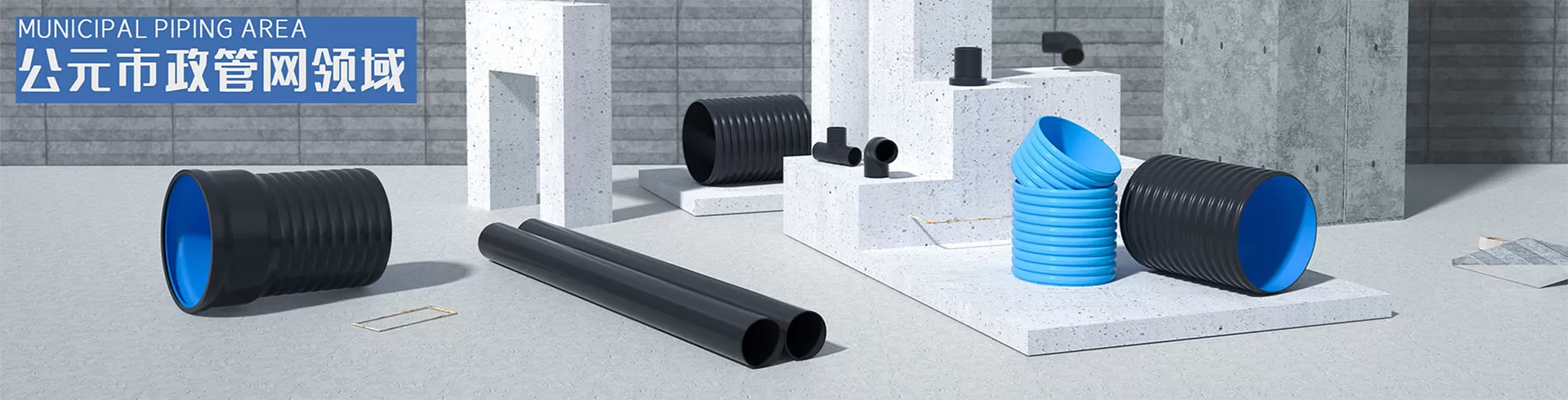

In mountain highway construction, slope drainage and culvert engineering are life infra to ensure the long-term stability of the subgrade. In the face of complex geological and hydrological conditions, special carat pipes are becoming the preferred solution for drainage pipes due to their unique structural design. Carat pipes are high-density polyethylene wound reinforced pipes. The pipe wall is composed of flat inner walls and special-shaped reinforcing ribs, which are integrally formed by spiral winding process. This structure endows the pipe with extremely high ring stiffness, which can withstand deep soil pressure on the slope and heavy vehicle loads, effectively prevent the pipe body from deforming and collapsing, and ensure the long-term unobstructed drainage channel.
For highway culverts, hydraulic characteristics are crucial. The inner wall of the carat tube is as smooth as a mirror, the Manning roughness coefficient is extremely low, and the flow capacity under the same pipe diameter is significantly better than that of traditional concrete pipes. Even under the instantaneous flood peak flow during the flood season, it can quickly discharge slope seepage and surface runoff, reducing the risk of subgrade water damage. At the same time, the high-density polyethylene material is chemically inert, resistant to acid and alkali corrosion, and has natural resistance to acid water or mineral erosion in the complex soil environment in mountainous areas. No anti-corrosion maintenance is required throughout the life cycle.
In terms of construction adaptability, the carat pipe adopts socket fused connection or throttle socket connection, and the interface is tightly sealed, which can achieve zero leakage and avoid culvert seepage and hollowing out the roadbed. The pipe material is light and high-strength, and the length of a single section can be customized, which greatly reduces the difficulty of hoisting and transshipment of narrow working surfaces in mountainous areas and accelerates the construction progress. Its flexible structure can also adapt to a certain degree of longitudinal uneven settlement, especially for soft foundation sections or seismic fortification areas.
When selecting special carat tubes for culverts, the ring stiffness grade should be determined according to the design buried depth and load calculation. Usually, SN8 grade and above can meet the drainage needs of most highways. During acceptance, focus on checking the compactness of the pipe wall structure and the material of the interface sealing ring. Scientific material selection and standardized construction can make carat tubes play a long-term value in the drainage system of highway slopes and protect every smooth road through mountains and mountains.


