
 简体中文
简体中文 Русский
 لالعربية
 Bahasa Melayu
 Tiếng Việt
 Bahasa Indonesia
 Українська
 Español
 Deutsch
 Français
 رسی
رسی ไทย
ไทย Português
 Nederlands
 Türkçe
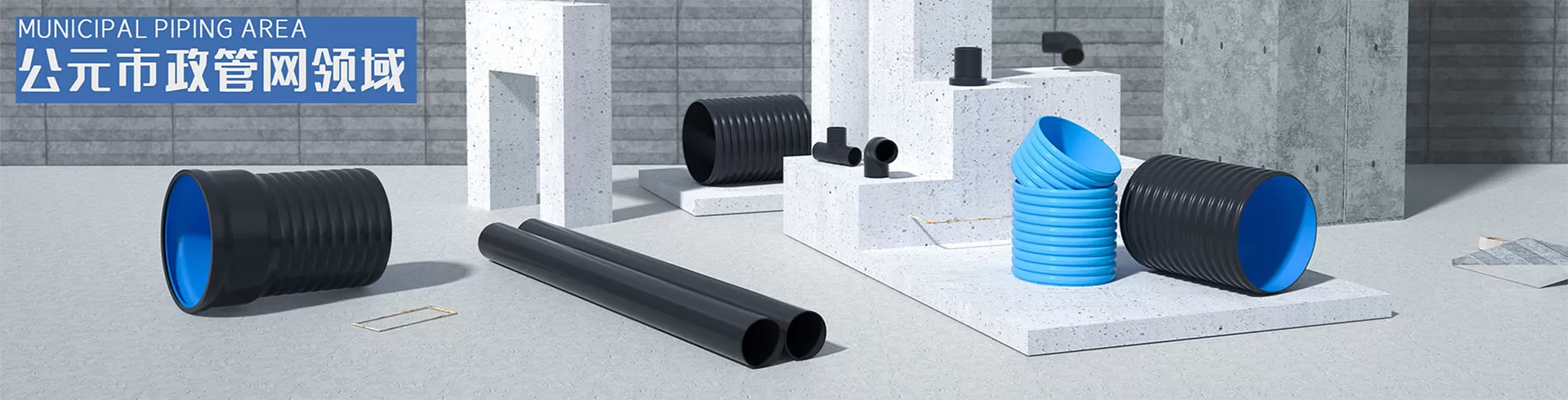
.jpg "Town sewage pipe network upgrade, steel belt bellows landing construction pointsthe1page")
As a key node of urban-rural integration, the sewage pipe network built in the early years mostly has problems such as small pipe diameter and aging material, which is difficult to meet the current sewage collection and treatment needs. Upgrading has become the core measure to improve the environmental governance capacity of the market town. With its high strength, corrosion resistance and good flexibility, steel bellows have become the preferred pipe material for the upgrade of the sewage pipe network in the market town. The standardization of its landing construction directly determines the operating life and efficiency of the pipe network.
The first is the trench excavation process. The excavation width and depth need to be determined strictly according to the design drawings, and the slope slope should be adjusted according to the soil conditions to avoid over-excavation or under-excavation. The base needs to be cleaned up and tamped. If there is a soft soil layer or quicksand layer, it should be replaced with crushed stone or plain soil in time. At the same time, drainage ditches and water collection wells should be set on both sides of the trench to ensure that there is no water accumulation in the trench during construction to prevent the base from being foamed and softened.
During the pipeline laying stage, special hoisting equipment and flexible spreaders are required to avoid bumping and damage to the outer wall of the steel belt bellows. Before docking, the interface end face and the rubber ring groove should be thoroughly cleaned to check whether the rubber ring is intact and not damaged. Then insert the rubber ring into the groove, apply a small amount of neutral lubricant, align the interface, and tighten it evenly with a fastener to ensure that the interface is tightly sealed.
The interface seal is the key to the construction. The rubber ring needs to be naturally attached to the groove wall, and there should be no distortion or displacement. After the laying is completed, the water closure test should be carried out in sections. The test head needs to meet the design requirements, and the continuous observation should be carried out for 24 hours. The leakage is controlled within the allowable range of the specification before entering the next step.
The backfill operation should follow the principle of layered tamping. Fine soil or sand should be used to backfill within 50cm of both sides and top of the pipeline. It is forbidden to use large stones or frozen soil. The thickness of each backfill should not exceed 30cm. Small tamping equipment should be used to tamper layer by layer to ensure that the compactness of the backfill around the pipeline meets the design standards and avoids pressure deformation of the pipeline.
After the construction is completed, it is necessary to carry out a comprehensive acceptance inspection in conjunction with supervision, operation and maintenance units, focusing on inspecting the appearance of the pipeline, the sealing of the interface, the degree of backfill compaction and the results of the closed water test to ensure that all indicators meet the standards and lay a solid foundation for the long-term stable operation of the sewage pipe network in the market town.


